
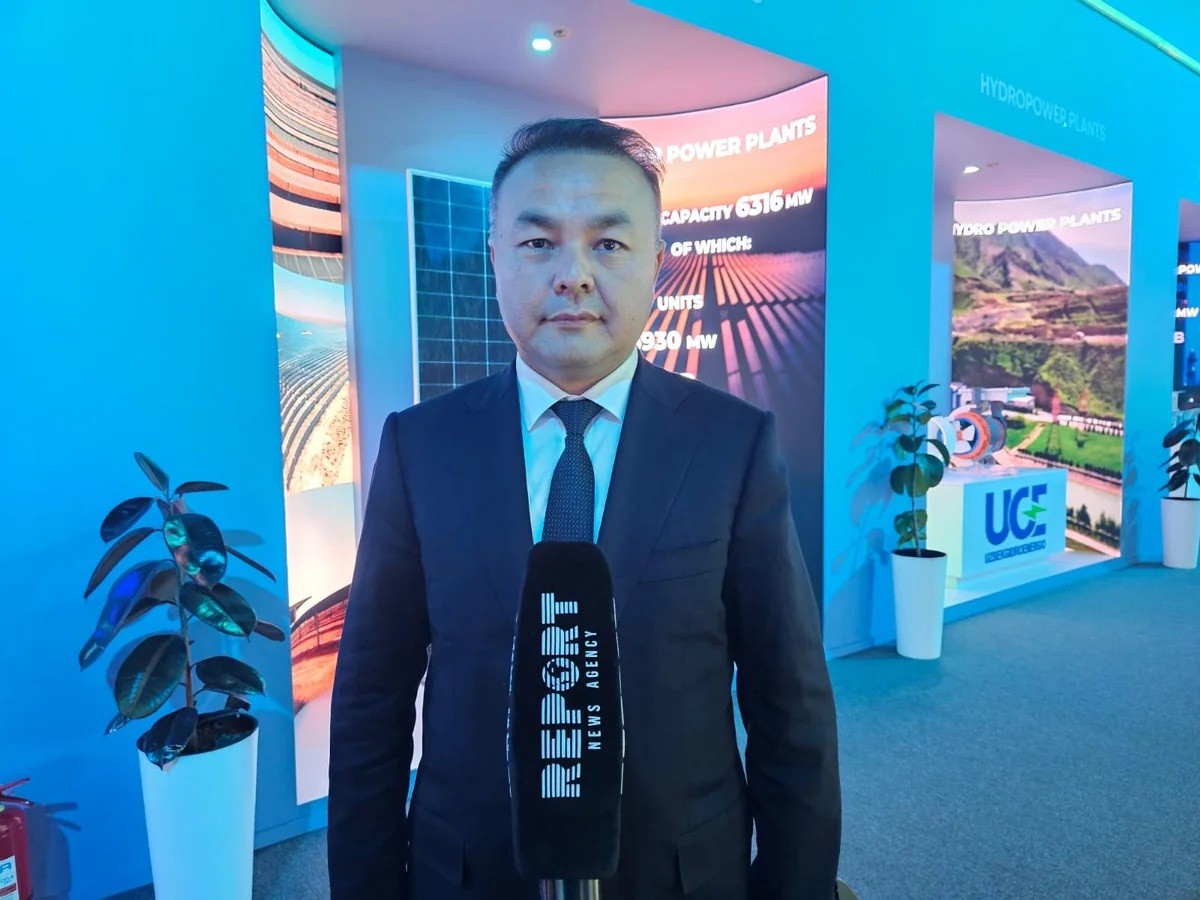
The feasibility study (FS) for the Caspian green energy corridor project – which will connect Central Asia to Europe via Azerbaijan – is scheduled to be completed by January 2027, Report informs, citing Umid Mamadaminov, Deputy Minister of Energy of Uzbekistan, on the sidelines of the 5th Tashkent International Investment Forum.
According to Mamadaminov, preparatory work on the FS has already begun, and CESI, an Italian engineering and consulting company, has been selected as the lead consultant for the project.
"We expect the first phase of the FS to be completed by January 2027. This will provide the technical, economic, and commercial basis for moving to the next stage of project implementation," he noted.
The Deputy Minister emphasised that the green energy corridor is one of the most strategically significant energy initiatives being developed in Central Asia. According to him, the project aims to export electricity generated from renewable sources in Central Asia to European markets via a dedicated transmission corridor across the Caspian Sea.
"Central Asia has vast renewable energy resources, particularly significant potential for wind and solar power generation. Uzbekistan and Kazakhstan alone are implementing large‑scale renewable energy development programmes that will create substantial opportunities for future green electricity exports. The green energy corridor is designed to unlock this regional potential and strengthen energy connectivity between Central Asia and Europe," he said.
Mamadaminov noted that all participating countries are jointly involved in implementing the initiative, and a special project company has already been established to coordinate the project.
He stressed that the project is based on proven technologies successfully applied in other regions of the world. "This is not an experimental concept. Similar high‑voltage submarine interconnector projects already operate successfully, including NorNed between Norway and the Netherlands, BritNed between the Netherlands and Great Britain, North Sea Link between Norway and Great Britain, NordLink between Germany and Norway, Viking Link between Denmark and Great Britain, and the SAPEI cable connecting mainland Italy with Sardinia. The uniqueness of this project lies in the fact that it will create the first direct green energy bridge between Central Asia and Europe," the Deputy Minister noted.
Commenting on broader regional cooperation, Mamadaminov said that Uzbekistan and Azerbaijan continue to strengthen strategic partnership in the energy sector. "In particular, the State Oil Company of Azerbaijan (SOCAR) and Uzbekneftegaz are actively cooperating across a number of areas in the oil and gas industry."
He added that energy cooperation between the two countries extends beyond traditional hydrocarbons, increasingly covering renewable energy development, regional energy connectivity, and long‑term initiatives in the field of energy security.
https://report.az/en/energy/mamadaminov-first-phase-of-caspian-energy-corridor-feasibility-study-to-be-completed-in-january-2027-exclusive