
Sharp fluctuations in the global oil market are creating opportunities for Azerbaijan to increase revenues from energy exports.
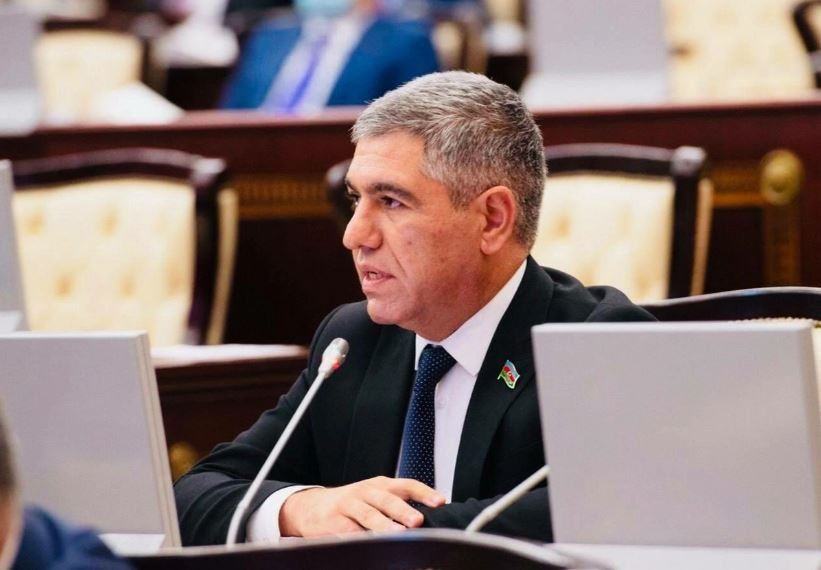
This was stated by Member of Parliament Vugar Bayramov in an interview with Report.
The deputy noted that the rise in oil prices could lead to faster growth in state budget revenues and foreign exchange reserves: “In the 2026 state budget, the average price of one barrel of oil is planned at 65 US dollars. This is an annual average figure. Even with short-term sharp increases, Azerbaijan, as a supporter of stability and peace agenda in the region, prioritizes long-term balance in the oil market. Long-term equilibrium in global markets should be determined by economic factors rather than political ones. However, at present, political factors are prevailing over economic criteria.”
Vugar Bayramov emphasized that rising oil prices increase revenues for energy-exporting countries but also heighten risks in the global economy: “In 2025, Azerbaijan produced 27.7 million tons of oil together with gas condensate. On average, daily crude oil production amounted to 460 thousand barrels, condensate production to 111 thousand barrels, and total production to 571 thousand barrels. Last year, the country exported 23.1 million tons of oil.”
According to the deputy, the price of Brent crude oil has risen by approximately 20% in recent periods, exceeding 110 US dollars per barrel: “This represents nearly a 30% increase in oil prices following the start of the war with Iran. Price increases have also affected stock markets — Asian markets opened the week with significant declines.”
V. Bayramov recalled the US President’s statement that the rise in oil prices is temporary and will stabilize after the war ends: “However, most investors do not expect a sharp decline in the short term. Difficulties in the Strait of Hormuz affect only about 20% of energy shipments, but the overall situation in the Middle East and reduced production play a much larger role. Production in Iraq has fallen by 60%, while Saudi Arabia, the UAE, and Kuwait have been forced to cut output. Damage to infrastructure in Gulf countries makes rapid recovery of production difficult. The US desire to bring an additional 300–400 thousand barrels of oil per day to the market will not significantly change the balance. The duration of the war, its geography, and the time and financial resources required to restore destroyed infrastructure afterward remain the main drivers of the market.”
While this situation has a positive impact on increasing Azerbaijan’s energy revenues, the risks emerging in the global economy and tensions in the region should be carefully monitored in the long-term perspective.
https://report.az/energetika/vuqar-bayramov-azerbaycan-enerji-satisindan-bu-il-daha-cox-gelir-elde-ede-biler